Modern football is fundamentally a game of space. While goals decide outcomes, it is space—how it is created, occupied, denied, and exploited—that determines control over a match. Tactical formations are the primary tools teams use to manage space, shaping how players position themselves in relation to teammates, opponents, and the ball. Far from being static lineups on a team sheet, formations are dynamic spatial frameworks that govern decision-making across all phases of play.
A football tactical breakdown of formations reveals that their true value lies not in numerical symmetry, but in how effectively they control space. Whether in possession, out of possession, or during transitions, formations provide structure that allows teams to compress, stretch, overload, or protect specific areas of the pitch. Understanding this spatial logic is essential to analyzing modern football performance.
The Relationship Between Formations and Space
Formations define initial positioning, but their deeper purpose is spatial organization. Each formation allocates players across vertical and horizontal zones, determining where pressure can be applied and where vulnerabilities may exist.
Formations as Spatial Blueprints
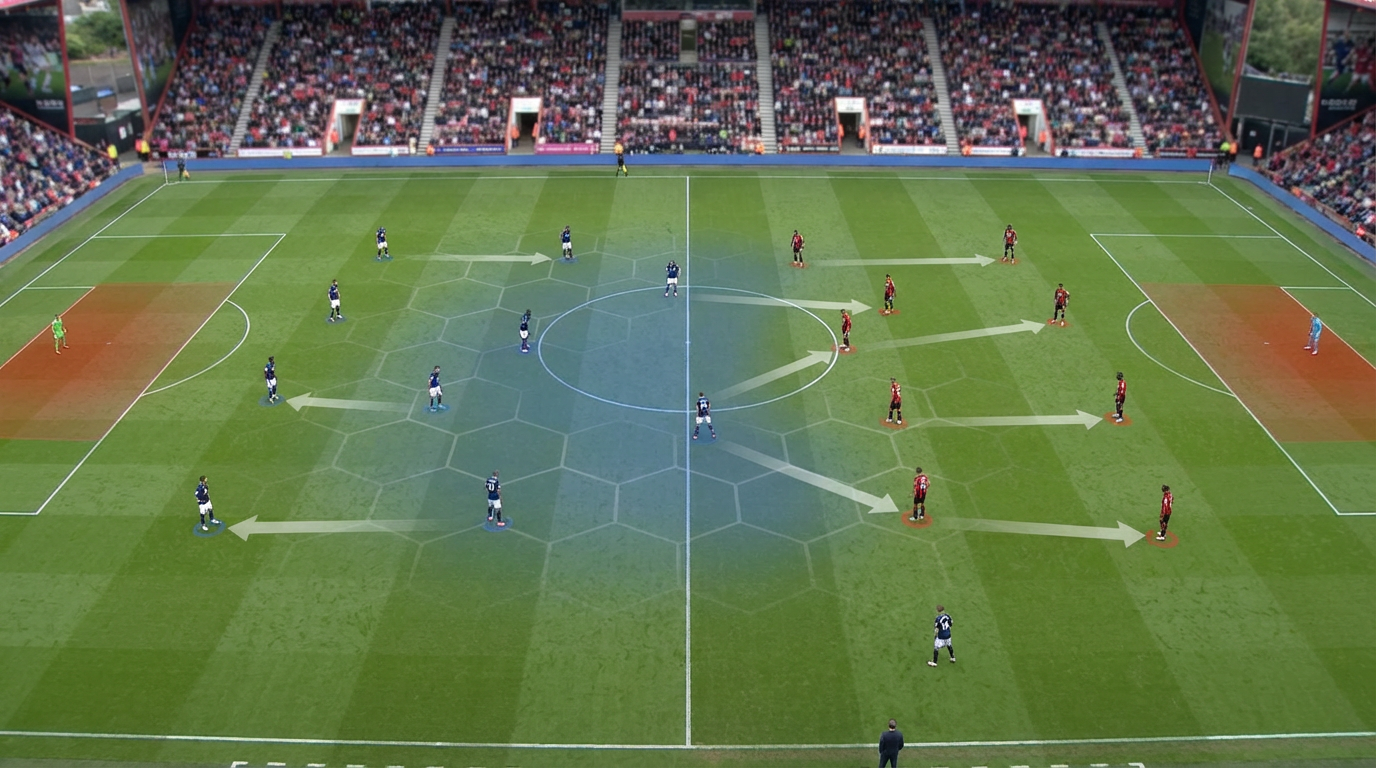
Rather than rigid instructions, formations act as blueprints for space occupation. They establish reference points for players, ensuring balanced coverage across the pitch. Analysts focus on how formations distribute players across key zones such as central corridors, half-spaces, and wide channels.
Effective formations ensure that critical spaces are always either occupied or protected.
Dynamic Nature of Formations
In modern football, formations shift constantly. A team listed as 4-3-3 may defend in a 4-1-4-1 and attack in a 2-3-5. Tactical analysis therefore examines formations as flexible structures that adapt to game phases while maintaining spatial principles.
Controlling Space in Possession
When a team has the ball, formations are designed to stretch the pitch, create passing lanes, and destabilize defensive structures.
Width and Depth as Spatial Tools
Attacking formations emphasize width and depth to expand the opponent’s defensive block. Wide players stretch defenses horizontally, while advanced attackers pin defenders vertically. This expansion creates interior spaces for midfielders and attacking players to operate.
Performance analysis evaluates how well formations maintain width without isolating players.
Occupying the Half-Spaces
Half-spaces—areas between central and wide zones—are among the most valuable areas in modern football. Many formations prioritize occupying these zones to create overloads and access dangerous central positions.
Formations that consistently place players between defensive lines exert greater attacking control.
Positional Play and Spacing Discipline
In structured attacking systems, players maintain specific distances to ensure passing options at all times. Tactical analysis focuses on spacing consistency rather than constant movement.
Well-spaced formations allow teams to circulate possession efficiently and resist pressure.
Controlling Space Out of Possession
Defensive formations aim to deny space rather than simply chase the ball.
Compactness and Defensive Blocks
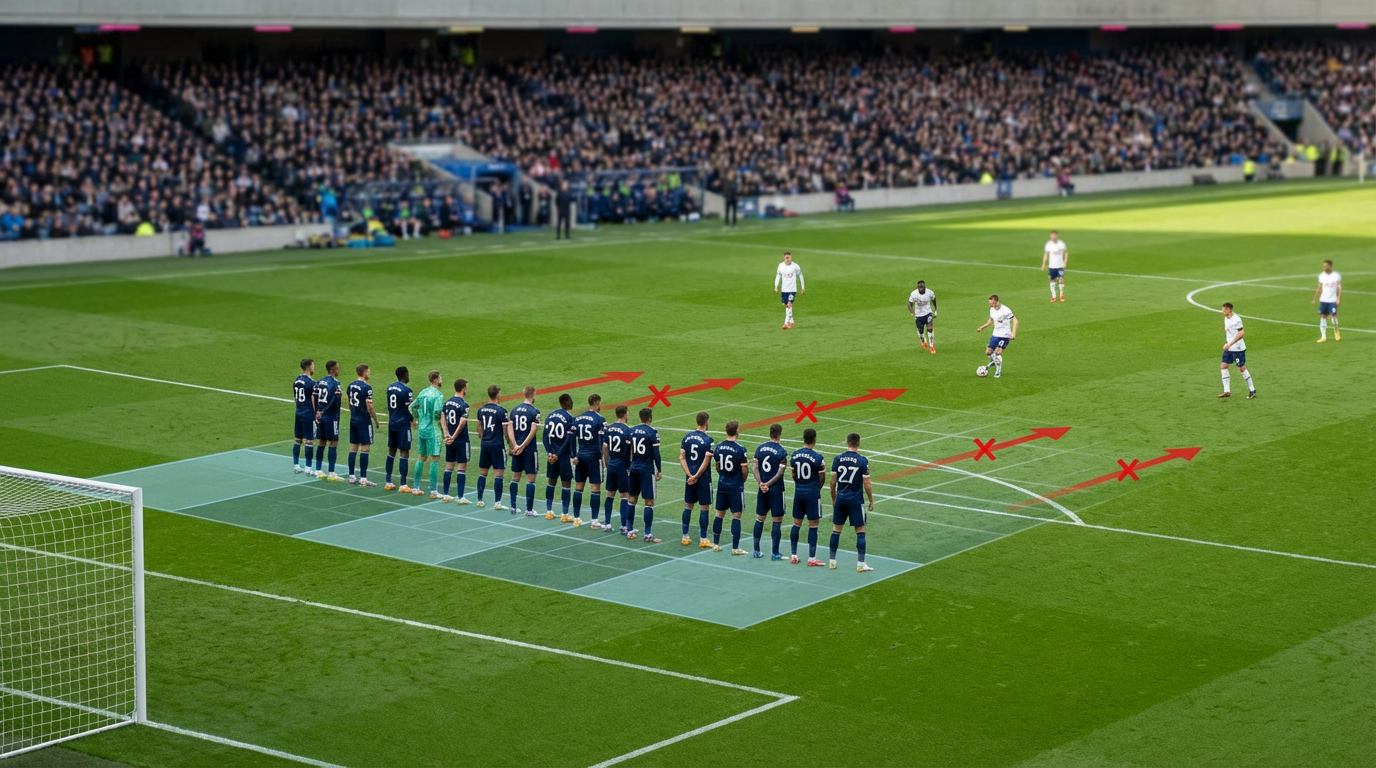
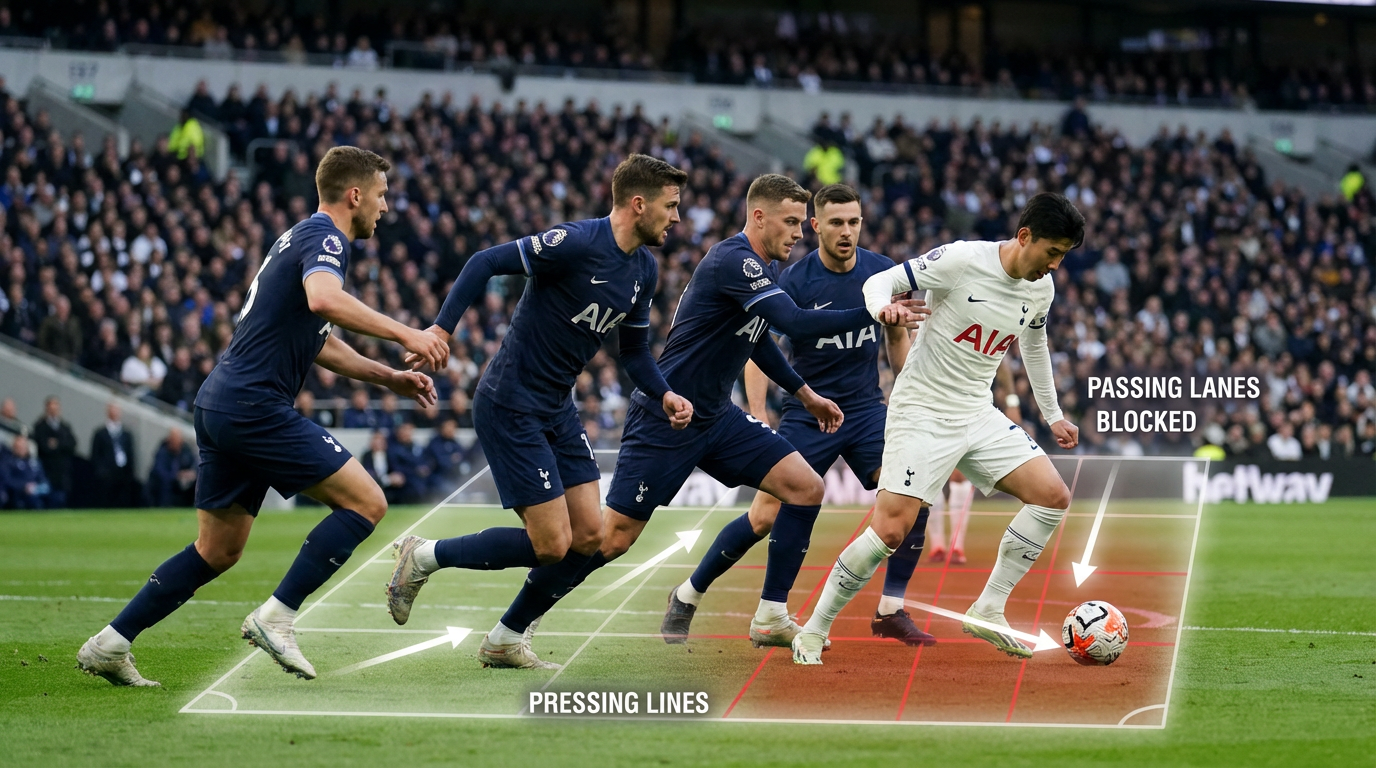
Out-of-possession formations prioritize compactness. Vertical and horizontal distances are reduced to close passing lanes and limit progression. Analysts examine how formations compress space centrally while guiding opponents toward less dangerous areas.
Effective compactness is collective, not individual.
Zonal Responsibility and Coverage
Formations assign players responsibility over zones rather than specific opponents. This zonal approach ensures spatial coverage even during rotations. Tactical breakdowns assess whether players maintain zone discipline or vacate critical areas.
Zonal control is essential for defensive stability.
Forcing Play Into Predictable Areas
Defensive formations are designed to channel opponents into wide areas or backward passes. By controlling access to central zones, teams reduce the quality of chances conceded.
Pressing traps often emerge naturally from formation-based space control.
Formations and Transition Phases
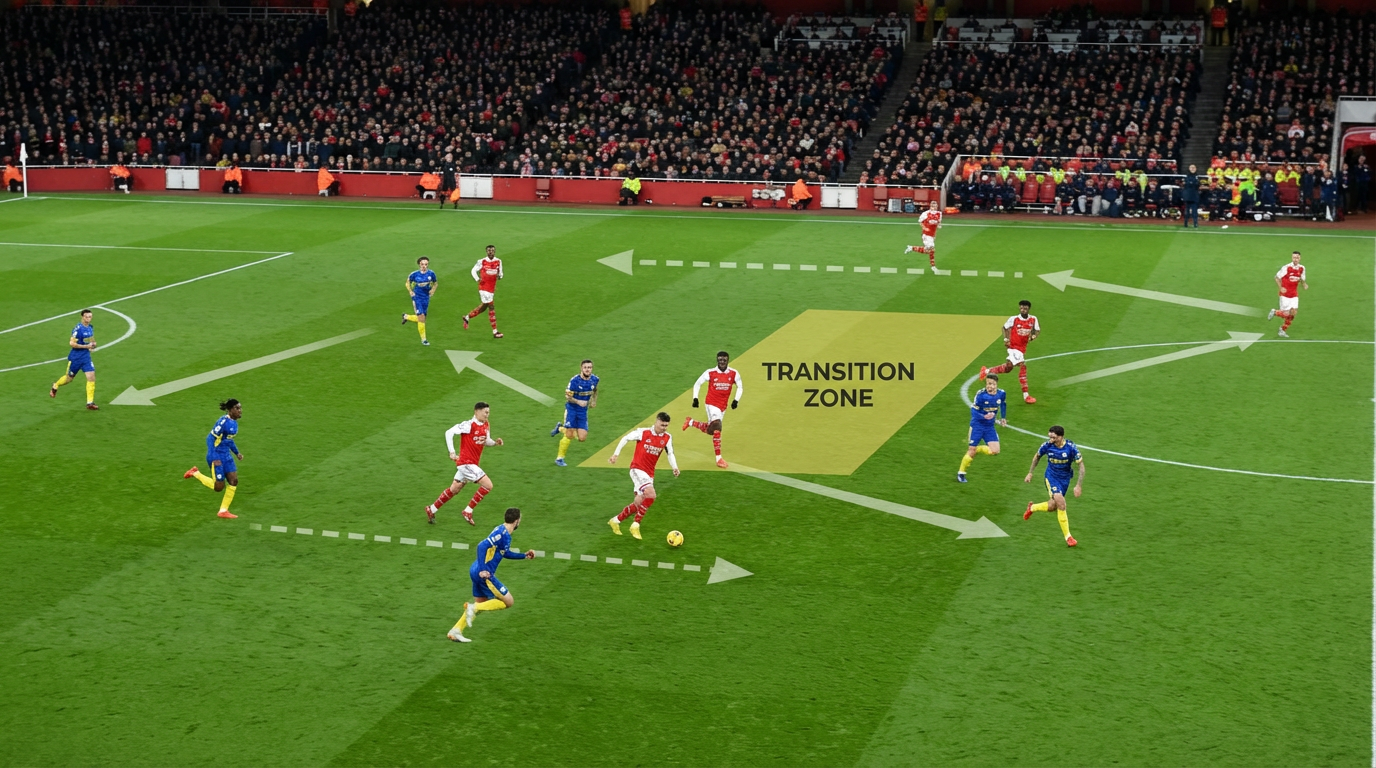
Transitions are moments when spatial organization is most vulnerable.
Defensive Transitions
When possession is lost, formations must contract quickly. Players nearest the ball apply immediate pressure while others recover into shape. Tactical analysis evaluates reaction speed and recovery positioning.
Teams that transition efficiently limit counterattacking space.
Attacking Transitions
Upon regaining possession, formations expand rapidly to exploit disorganized opponents. Forward runs and wide positioning are critical. Analysts assess whether players recognize transition moments and occupy space decisively.
Effective transitions convert spatial advantage into opportunity.
Comparing Common Formations and Spatial Control
Different formations prioritize different spatial outcomes.
4-3-3: Balanced Space Control
The 4-3-3 offers strong central presence and natural width. It allows teams to control midfield spaces while stretching defenses wide. Tactical analysis focuses on winger positioning and midfield balance.
This formation is adaptable across pressing and possession systems.
4-2-3-1: Central Overload and Stability
The double pivot provides defensive security while the attacking midfielder occupies central spaces between lines. Analysts evaluate how well the formation controls central zones without sacrificing width.
Its success depends on spatial coordination between lines.
3-5-2 and 3-4-3: Numerical Superiority in Key Zones
Three-defender systems create numerical advantages centrally or in wide areas depending on wing-back positioning. Tactical breakdowns examine how wing backs manage space on both flanks.
These formations excel at flexible space occupation.
Spatial Trade-Offs and Tactical Risks
Every formation involves compromise.
Exposed Zones and Weak Points
Certain formations leave predictable spaces exposed, such as wide areas behind full backs or central gaps during rotations. Tactical analysis identifies these risks and evaluates mitigation strategies.
No formation controls all spaces equally.
Dependence on Player Profiles
Formations rely on players capable of executing spatial demands. High defensive lines require pace and anticipation, while wide systems demand endurance and positioning awareness.
Mismatch between formation and player profile reduces spatial effectiveness.
Role of Player Intelligence in Space Control
Formations provide structure, but players interpret space in real time.
Positional Awareness and Decision-Making
Players must recognize when to hold position and when to move. Tactical analysis evaluates spatial awareness and discipline.
Intelligent players enhance formation effectiveness without instruction.
Collective Synchronization
Space control is collective. One player’s movement affects the entire structure. Analysts focus on synchronization rather than isolated actions.
Disorganized movement weakens spatial integrity.
Data and Video Analysis of Spatial Control
Modern tactical breakdowns rely on both data and observation.
Positional Data and Heatmaps
Heatmaps and positional tracking illustrate how formations occupy space over time. Analysts interpret these visuals to assess consistency and balance.
However, data must be contextualized within match situations.
Video Analysis for Spatial Patterns
Video reveals spacing, movement timing, and defensive compactness. Tactical breakdowns use video to identify patterns formations create.
Visual analysis remains essential.
Tactical Adaptation and In-Game Adjustments
Formations evolve during matches to address spatial challenges.
Adjusting Shape to Control Key Zones
Teams may alter formation to protect central areas or exploit wide spaces. Tactical analysis evaluates responsiveness and effectiveness.
Flexibility enhances spatial dominance.
Substitutions and Structural Change
Personnel changes often alter spatial control. Analysts assess how substitutions affect spacing and balance.
Successful adjustments maintain structural integrity.
Long-Term Tactical Identity and Space Control
Over time, teams develop identities based on spatial principles.
Formation as a Reflection of Philosophy
Some teams prioritize central control, others width or pressing. Formations reflect these priorities. Tactical breakdowns consider consistency across matches.
Identity strengthens execution.
Evolution of Formations Over Seasons
As opponents adapt, formations evolve. Long-term analysis tracks how teams refine space control.
Adaptation sustains competitiveness.
Conclusion
A football tactical breakdown of how formations control space reveals the true essence of modern football. Formations are not merely starting positions but dynamic systems designed to manage space intelligently across all phases of play.
Teams that control space effectively dictate tempo, limit opposition options, and create higher-quality chances. Whether through compact defensive blocks, expansive attacking shapes, or rapid transitional organization, formations provide the framework for spatial dominance. In modern football, mastery of space—enabled by intelligent formation use—is the foundation of sustained tactical success.