Build-up play is the foundation of modern football tactics. It is the phase where teams progress the ball from defensive zones into advanced areas while maintaining control, structure, and balance. Effective build-up play allows teams to dictate tempo, manipulate opposition pressure, and create favorable conditions for attacking actions. In contemporary football, where pressing systems are increasingly sophisticated, structured build-up patterns have become essential for sustained success.
A football tactical breakdown of build-up play patterns reveals how teams organize themselves to evade pressure, exploit space, and advance collectively. Build-up play is not simply about passing from the back; it is a coordinated process involving positioning, movement, and decision-making across the entire team.
Understanding Build-Up Play in Modern Football
Build-up play begins from the moment a team regains controlled possession in defensive areas. Its objective is to progress the ball while preserving defensive security.
The Purpose of Build-Up Play
The primary aim of build-up play is to advance the ball into attacking zones without losing structural balance. Successful build-up creates numerical or positional advantages that facilitate controlled attacks.
Performance analysis evaluates build-up effectiveness by progression quality rather than speed alone.
Build-Up Play as a Tactical Identity
Many teams define their tactical identity through build-up philosophy. Some prioritize patient circulation, while others emphasize direct progression after initial passes.
Understanding a team’s build-up patterns reveals its broader tactical approach.
Structural Principles of Effective Build-Up
Build-up play depends on clear structural principles that guide player positioning and movement.
Positional Structure and Spacing
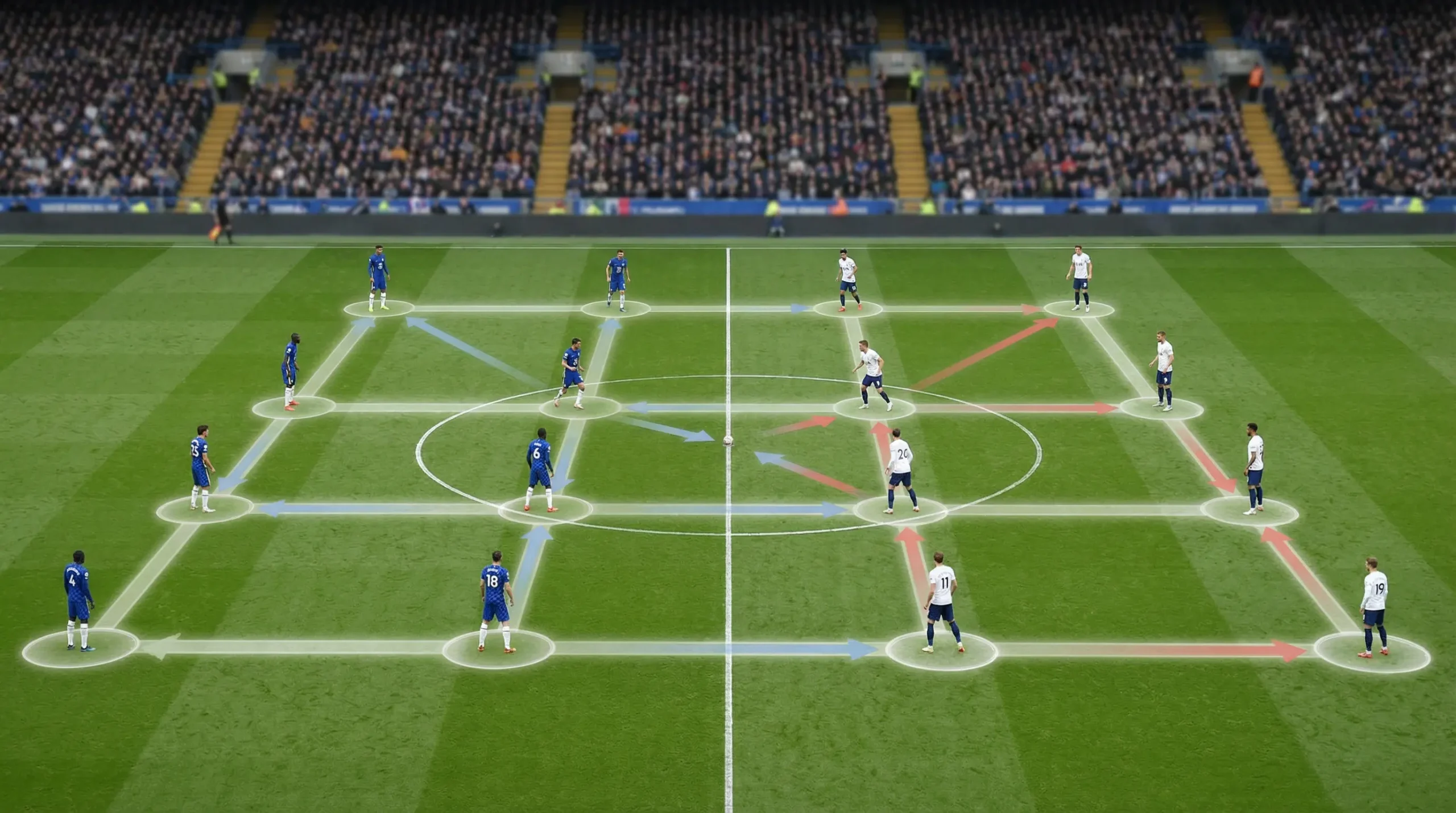
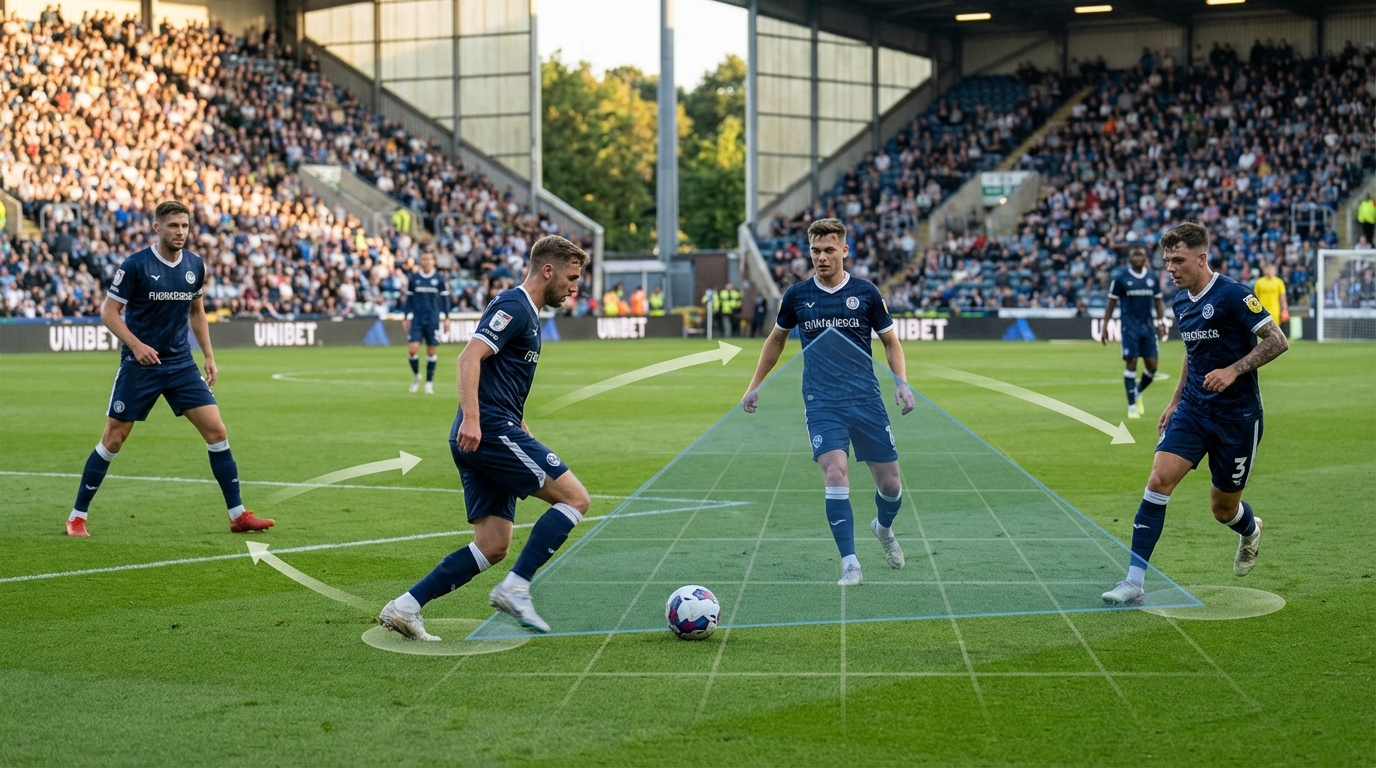
Effective build-up requires precise spacing. Players must position themselves at optimal distances to provide passing options and support ball circulation.
Compact spacing aids ball retention and enables quick combinations under pressure.
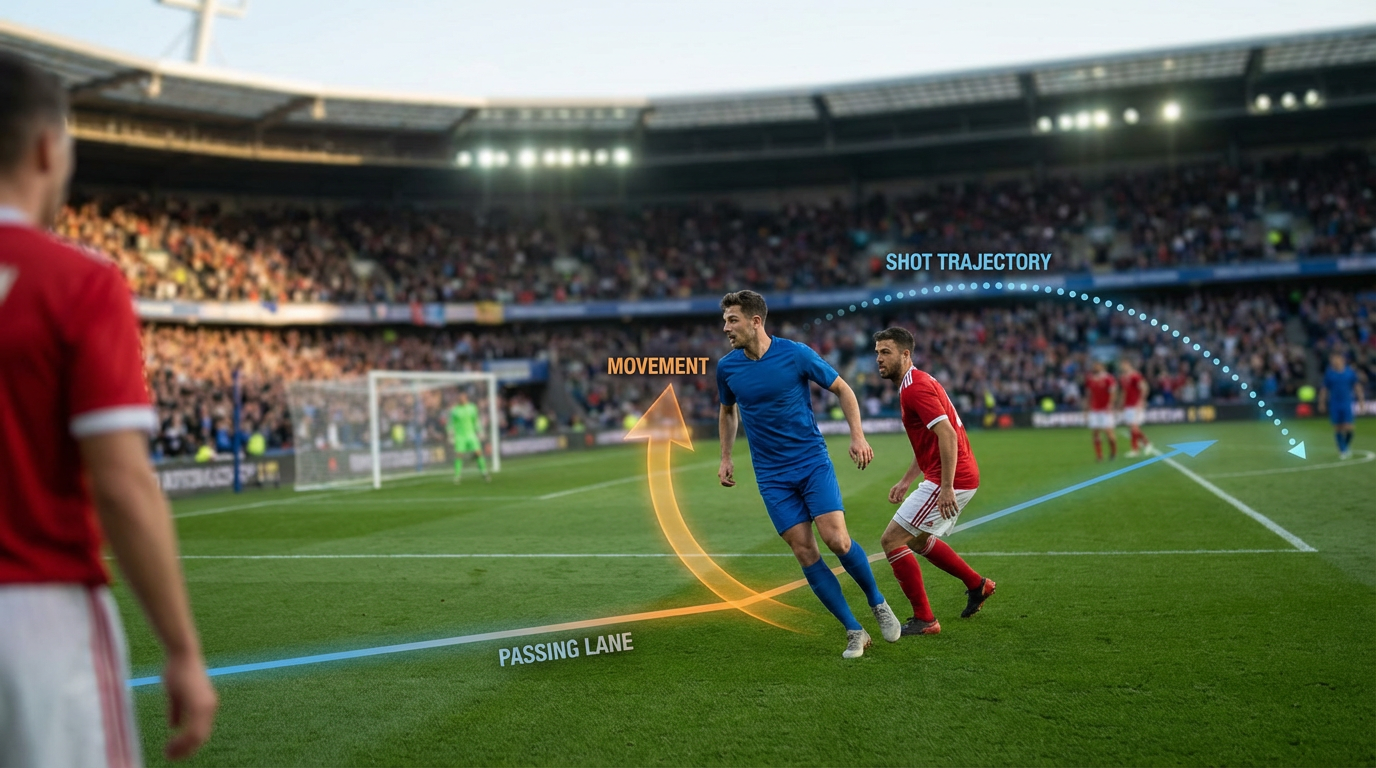
Creating Passing Lanes
Players adjust positioning to open passing lanes through defensive lines. Central defenders and midfielders often manipulate angles to bypass pressure.
Tactical analysis focuses on how consistently teams create and exploit these lanes.
Build-Up Patterns Against High Pressing
High pressing presents the greatest challenge to build-up play.
Building With a Back Four
In back-four systems, central defenders split wide while full backs adjust height. A defensive midfielder may drop between center backs to create a numerical advantage.
Performance analysis evaluates how teams manage pressing pressure while maintaining balance.
Building With a Back Three
Back-three systems naturally provide extra security during build-up. Wing backs position higher, stretching opposition pressing lines.
Analysts examine how midfielders connect build-up phases with attacking structures.
Goalkeeper Involvement
Modern goalkeepers play a critical role in build-up. Their positioning and distribution expand numerical advantages and stretch pressing lines.
Decision-making under pressure is a key evaluation point.
Midfield Roles in Build-Up Play
Midfielders act as the bridge between defense and attack.
The Holding Midfielder
The holding midfielder dictates build-up tempo. Their positioning determines passing angles and progression routes.
Performance analysis focuses on awareness, press resistance, and distribution quality.
Interior Midfielders and Rotations
Interior midfielders rotate positions to create overloads and disrupt marking schemes. These movements must be coordinated to avoid structural imbalance.
Successful rotations reflect tactical understanding.
Build-Up Through Wide Areas
Wide channels play an important role in progressing play.
Full Backs as Build-Up Facilitators
Full backs may remain deep to support circulation or advance to stretch pressing units. Their positioning depends on opposition pressure.
Tactical breakdowns evaluate timing and positioning consistency.
Use of Width to Bypass Pressure
Switching play to wide areas can bypass central congestion. Effective build-up teams recognize when to exploit width.
Wide progression often precedes central penetration.
Breaking Lines Through Build-Up
The ultimate objective of build-up play is to break opposition lines.
Progressive Passing
Progressive passes move the ball closer to goal while maintaining control. Analysts assess pass selection and risk management.
Quality outweighs volume.
Carrying the Ball Forward
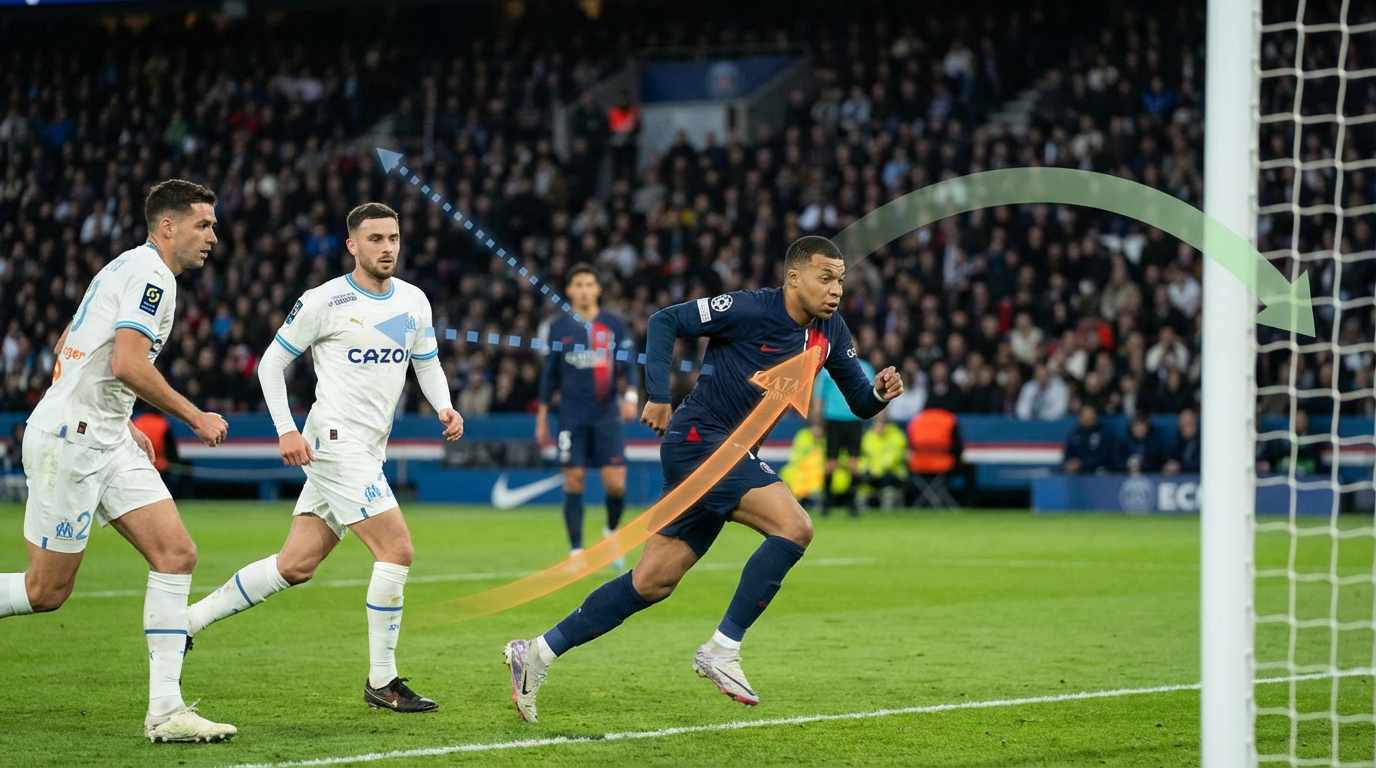
Ball-carrying defenders and midfielders create advantages by drawing pressure. Tactical analysis examines timing and space recognition.
Controlled carries complement passing patterns.
Build-Up Play and Rest Defense
Build-up structure influences defensive security.
Maintaining Defensive Balance
Rest defense refers to player positioning during attacks to prepare for potential possession loss. Effective build-up ensures defensive cover remains.
Analysts evaluate whether teams maintain sufficient numbers behind the ball.
Preventing Counterattacks
Compact build-up structures reduce counterattack vulnerability. Quick reaction after loss is essential.
Build-up and transition phases are closely linked.
Build-Up Patterns in Different Tactical Systems
Different formations shape build-up behavior.
4-3-3 Build-Up Patterns
The 4-3-3 allows flexible build-up through midfield triangles and wide progression. Performance analysis focuses on spacing and rotations.
4-2-3-1 Build-Up Structure
The double pivot offers stability, while the attacking midfielder occupies central spaces. Analysts examine vertical connectivity.
Three-Defender Systems
Three-defender systems emphasize width and security. Wing backs play a critical role in progression.
Tactical breakdowns assess balance between width and central control.
Common Build-Up Challenges
Build-up play carries inherent risks.
Press Resistance Under Pressure
Poor technical execution leads to turnovers. Analysts evaluate press resistance and decision-making.
Structural Rigidity
Overly rigid structures reduce adaptability. Build-up must allow controlled flexibility.
Tactical intelligence mitigates rigidity.
Data and Video Analysis of Build-Up Play
Modern analysis tools support build-up evaluation.
Key Build-Up Metrics
Metrics include pass progression, touches under pressure, and line-breaking actions. These indicators reveal build-up effectiveness.
Context remains essential.
Video Analysis for Pattern Recognition
Video reveals positioning, movement, and spacing patterns. Analysts study repeated sequences to identify strengths and weaknesses.
Visual analysis is indispensable.
Tactical Adaptation and Build-Up Variation
Teams adapt build-up based on opposition behavior.
Adjusting Build-Up Against Different Presses
Against man-oriented presses, rotations are emphasized. Against zonal presses, spacing and patience are prioritized.
Adaptability enhances effectiveness.
In-Game Build-Up Adjustments
Coaches modify build-up structure during matches. Performance analysis evaluates player responsiveness.
Long-Term Importance of Build-Up Play
Build-up excellence contributes to tactical consistency.
Control and Match Management
Effective build-up allows teams to control tempo and manage matches.
Consistency reduces reliance on individual moments.
Foundation for Attacking Success
Quality build-up creates favorable attacking conditions.
Sustained success begins from the back.
Conclusion
A football tactical breakdown of build-up play patterns highlights their central role in modern football. Build-up play is not merely a technical exercise but a collective tactical process that integrates structure, decision-making, and spatial awareness.
Teams that master build-up patterns control games by dictating tempo, resisting pressure, and creating advantageous attacking scenarios. As pressing systems continue to evolve, intelligent build-up play remains a defining characteristic of top-level football. Mastery of this phase provides the platform upon which all successful attacking play is built.