In modern football, tactical flexibility is no longer a luxury — it is a necessity. The difference between elite teams and merely competitive sides often lies not in individual brilliance, but in the ability to adapt structure, tempo, pressing schemes, and attacking mechanisms according to the opponent. The best managers treat every match as a unique strategic puzzle, adjusting their approach without compromising their core identity.
From possession-dominant systems inspired by Pep Guardiola to pragmatic knockout-game masterclasses associated with José Mourinho, football strategy is fundamentally about reading context. Adapting to different opponents involves understanding space, risk management, game state, and player profiles — all within the dynamic flow of 90 minutes.
This analysis explores how elite teams adjust their tactical structures when facing varying opposition profiles, from high-pressing sides to deep defensive blocks.
1. Understanding Opponent Profiles
Strategic adaptation begins with profiling the opponent. Teams typically fall into several broad tactical categories:
- High-pressing, aggressive sides
- Deep-block, low-possession teams
- Direct transitional teams
- Possession-dominant control teams
- Hybrid or flexible systems
A coach’s responsibility is to design a game plan that exploits structural weaknesses while protecting against the opponent’s strengths.
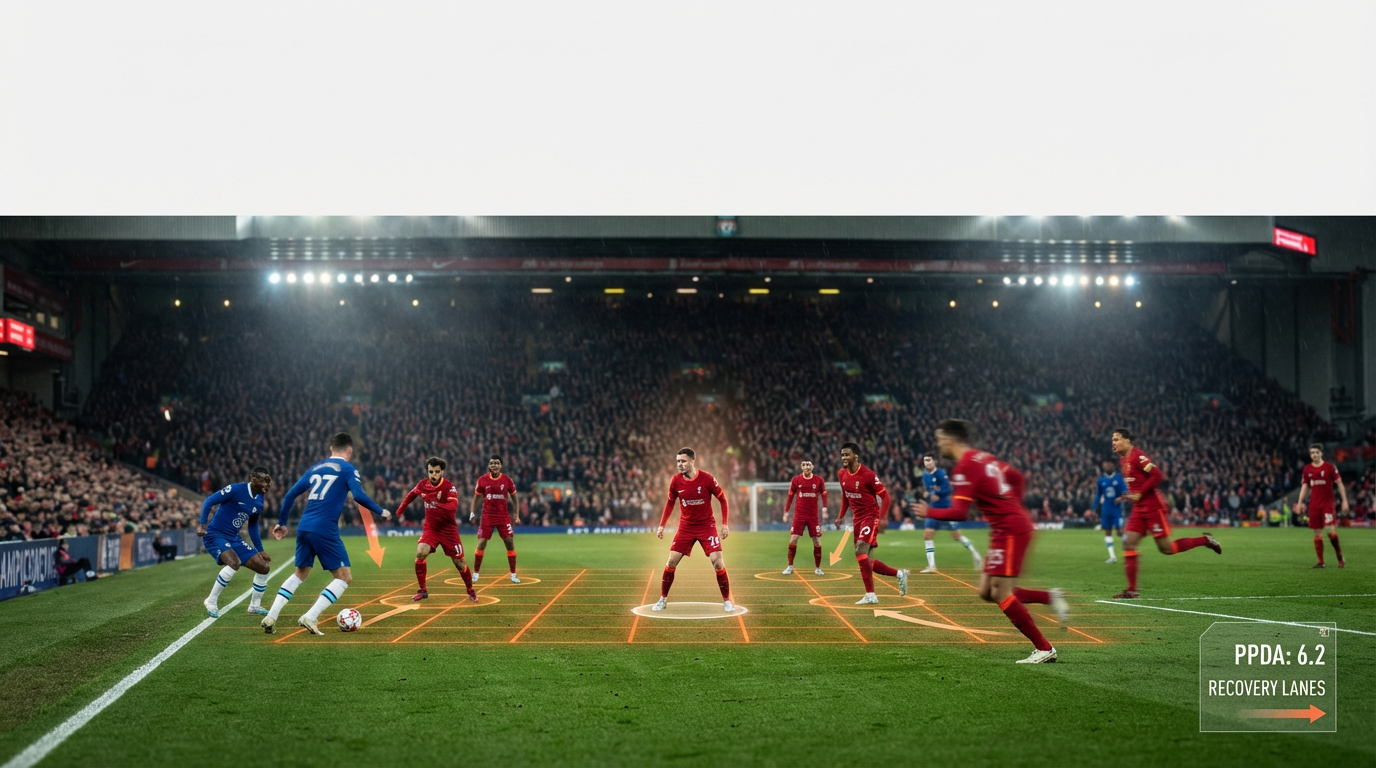
For example, facing a high-pressing team like those historically associated with Jürgen Klopp requires different solutions than facing a low-block team that defends with 10 players behind the ball.
The central principle: control space differently depending on the opponent’s intent.
2. Adapting Build-Up Against High Pressing Teams
High pressing aims to compress space, force turnovers in advanced zones, and destabilize defensive structure before it can settle.
Strategic Adjustments:
1. Creating Numerical Superiority in First Phase
Teams often shift from a standard back four to a back three during build-up:
- A defensive midfielder drops between center-backs.
- Fullbacks push higher to pin opposing wingers.
- The goalkeeper becomes an active distributor.
This creates a 3v2 or 4v3 advantage in the first pressing line.
2. Manipulating Pressing Triggers
Pressing sides rely on cues:
- Back to goal body shape
- Wide center-back receiving on weaker foot
- Poor first touch
Elite teams deliberately bait pressure before switching play quickly into the vacated space.
3. Vertical Directness
Instead of circulating possession slowly, teams may bypass midfield congestion with:
- Direct diagonal passes
- Quick third-man combinations
- Early runs behind the press
This approach reduces risk while exploiting high defensive lines.
3. Breaking Down Deep Defensive Blocks
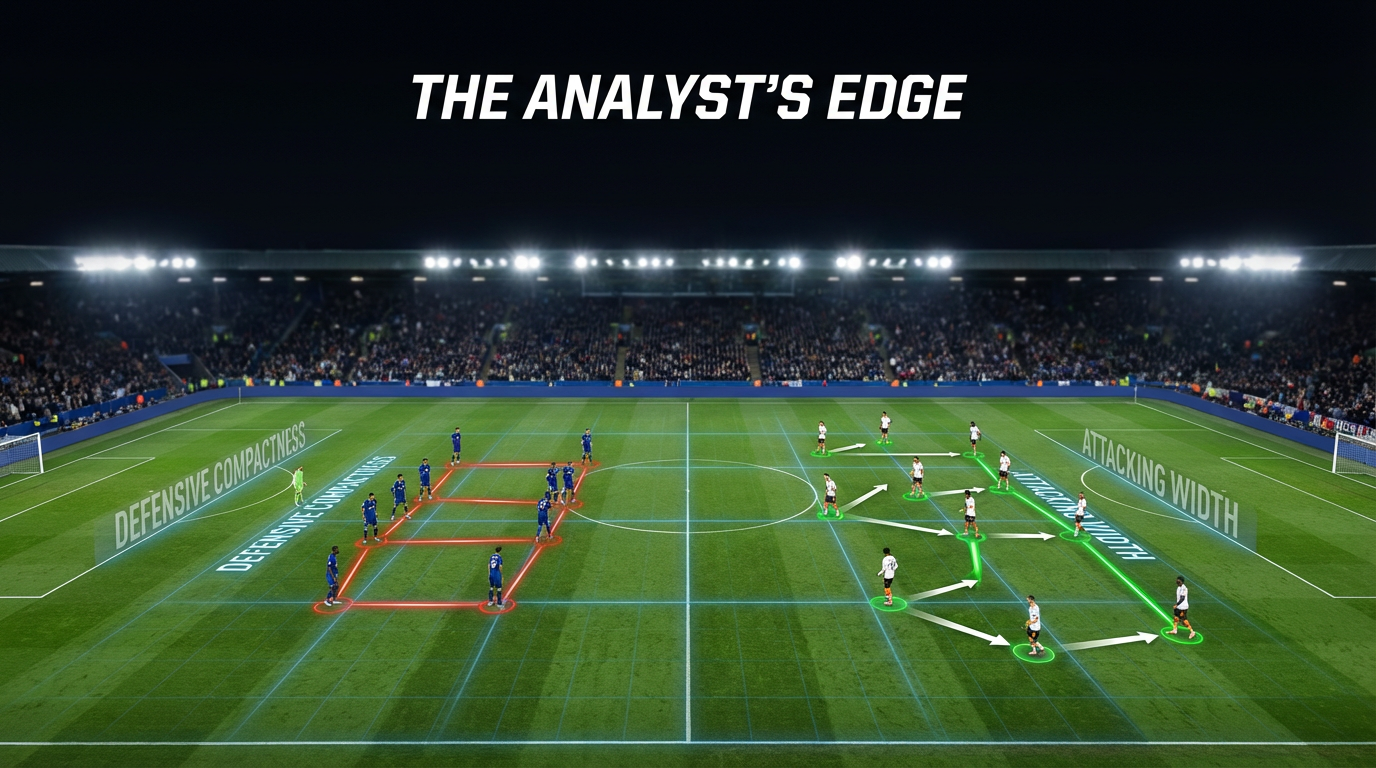
Low-block teams defend compactly in 4-4-2 or 5-4-1 structures, reducing vertical and horizontal gaps. The challenge shifts from resisting pressure to generating controlled chaos in tight spaces.
Tactical Solutions:
1. Width and Overloads
Stretching the defensive line horizontally is essential:
- Wingers maintain maximum width.
- Fullbacks overlap or invert to create interior overloads.
2. Positional Rotation
Dynamic rotations between:
- Fullback and winger
- Midfielder and forward
- False nine movements
This forces defenders to make decisions and can disrupt rigid marking structures.
3. Shot Volume and Second Balls
Against compact defenses, clear chances are rare. Strategic emphasis shifts to:
- Edge-of-box shooting
- Cross-volume strategy
- Counter-pressing second balls immediately after blocked attempts
The key is maintaining territorial dominance while avoiding exposure to counters.
4. Adjusting Defensive Shape Against Possession Teams
When facing possession-heavy opponents, defensive organization becomes paramount.
For example, teams competing in the UEFA Champions League often encounter technically superior sides comfortable controlling rhythm.
Defensive Adaptation Methods:
1. Mid-Block Instead of High Press
Rather than pressing aggressively, teams compress central zones in a 4-5-1 shape.
2. Narrow Compactness
Wingers tuck inside to eliminate passing lanes into half-spaces.
3. Directed Pressing
Instead of universal pressure, teams:
- Force play toward the touchline.
- Trap possession near the sideline.
- Trigger coordinated pressing when backward passes occur.
This controlled defensive approach reduces structural vulnerability.
5. Transition Strategy vs Direct Counterattacking Teams
Direct transitional sides rely on speed, vertical passes, and exploiting space after regaining possession.
To counter this:
Structural Adjustments:
1. Rest Defense Setup
During attacking phases, teams retain:
- Two center-backs plus a holding midfielder.
- Narrow positioning to control central channels.
2. Controlled Risk in Final Third
Fullbacks may stagger rather than push simultaneously.
3. Immediate Counter-Press
Within 5 seconds of losing possession, the objective is to:
- Close the ball carrier.
- Block forward passing lanes.
- Force lateral play.
Failure to organize rest defense is often punished decisively.
6. In-Game Tactical Flexibility
Pre-match plans rarely survive intact. Adapting within matches separates reactive teams from proactive ones.
Key Adjustment Triggers:
- Scoreline changes
- Red cards
- Fatigue patterns
- Opponent substitutions
- Momentum swings
For instance, a team protecting a narrow lead may shift from 4-3-3 to 5-4-1, sacrificing attacking width for defensive solidity.
Conversely, trailing teams may:
- Add a second striker.
- Move to a 3-4-3.
- Push center-backs into midfield zones.
Modern football demands structural elasticity.
7. Personnel-Based Adjustments
Adaptation is not only structural — it is individual.
Example Strategic Tweaks:
- Deploying a more press-resistant midfielder against high press.
- Selecting aerially dominant forwards versus cross-heavy defensive schemes.
- Using pace-heavy wingers against slow fullbacks.
Elite squads are built with profile diversity to enable tactical responsiveness.
8. Psychological and Tempo Control Factors
Strategic adaptation extends beyond formations.
Tempo Manipulation:
- Slowing play to disrupt aggressive momentum.
- Accelerating transitions to exploit disorganized defenses.
Emotional Control:
- Managing referee pressure.
- Breaking opponent rhythm through controlled fouls.
- Maintaining composure under intense pressing environments.
Game intelligence often outweighs tactical diagrams.
9. Data-Driven Adaptation
Modern teams rely heavily on performance analytics:
- Pressing intensity (PPDA)
- Defensive line height
- Expected goals (xG)
- Progressive passes
- Zone occupation maps
Opposition analysis departments provide scenario simulations before matches, allowing coaching staff to prepare multiple contingency plans.
However, overreliance on data without contextual reading can create rigidity. Successful adaptation blends analytics with real-time intuition.
10. Maintaining Identity While Adapting
Perhaps the most important strategic principle: adaptation must not erase identity.
The best teams maintain:
- Core build-up principles
- Defined pressing philosophy
- Recognizable positional structure
Adaptation modifies emphasis — it does not abandon foundations.
For example:
- A possession team may become more direct.
- A pressing team may drop into mid-block.
- A counterattacking team may dominate territory if required.
The objective is controlled evolution, not reactive chaos.
11. Case Study Framework: Elite Adaptability
Elite clubs competing across domestic leagues and continental tournaments face stylistic diversity weekly. A team might face:
- A high-pressing rival on Saturday.
- A defensive compact opponent midweek.
- A transitional powerhouse the following weekend.
Strategic planning cycles are shorter than ever. Training sessions increasingly focus on scenario-based rehearsals rather than static drills.
Adaptability is now a competitive advantage equal to talent.
12. The Future of Tactical Adaptation
As football evolves, adaptation becomes faster and more granular.
Emerging trends include:
- Real-time data feedback during matches.
- Automated opposition pattern detection.
- Micro-adjustments within five-minute phases.
- Multi-system hybrid formations.
The modern coach is part strategist, part psychologist, part data analyst.
Tactical superiority now depends less on innovation alone and more on execution precision across varying contexts.
Conclusion: Adaptation as the Core of Competitive Success
Football strategy in modern competitions is a dynamic chess match played at high speed. Teams that rigidly impose one system without contextual awareness risk exposure. Those who adapt intelligently — altering shape, tempo, pressing, and risk management — maximize their competitive ceiling.
Adapting to different opponents requires:
- Tactical intelligence
- Squad versatility
- Structural clarity
- Real-time decision-making
- Psychological resilience
Ultimately, the most successful teams are not those with the most complex systems, but those with the clearest principles and the flexibility to apply them differently.
In elite football, strategy is no longer about having a plan.
It is about having multiple plans — and knowing precisely when to deploy each one.